
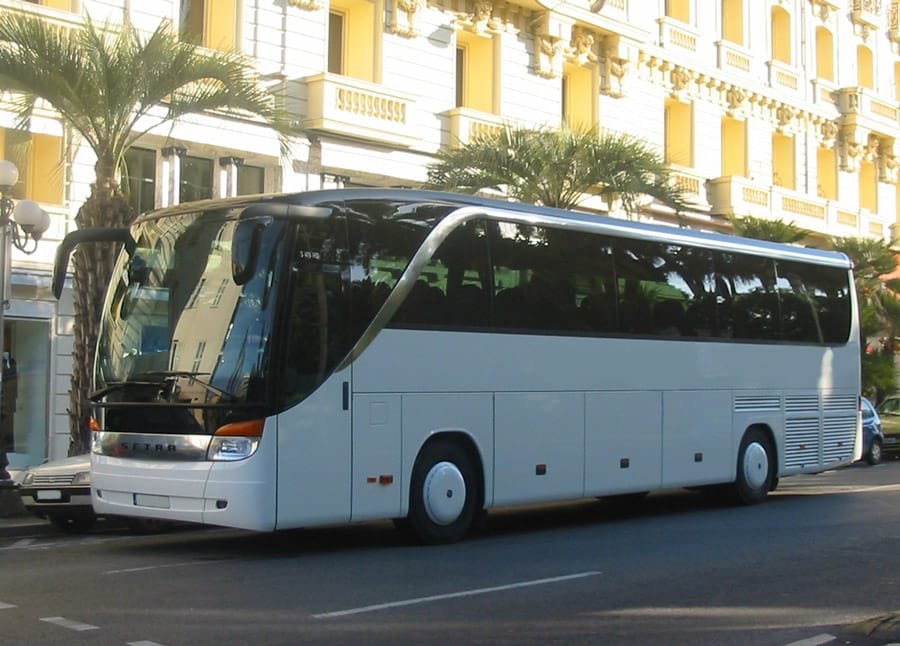
Coach vs Small Group Europe Tours is an important decision when planning a European itinerary, especially when the journey combines several cities, airports, hotels, sightseeing stops, and cross-border transfers. The right vehicle can affect not only comfort, but also travel time, hotel accessibility, luggage handling, scheduling, and the overall experience of the trip.

For travel agents, tour operators, DMCs, and MICE planners, choosing between a full-size coach and a smaller private vehicle is an operational decision as much as a travel preference. Leisure travelers and families face a similar question: should everyone travel together in one coach, or is a smaller vehicle better suited to the itinerary?
This guide explains Coach vs Small Group Europe Tours from a practical perspective, including group size, route flexibility, luggage, city travel, costs, comfort, and multi-country transportation.
Quick Answer: Coach vs Small Group Europe Tours
For larger groups, a coach is usually the most efficient option because it keeps travelers together and provides substantial luggage capacity. Small group Europe tours are better suited to minibuses or luxury vans when travelers want greater flexibility, easier access to city centers, and a more personalized experience. The best choice depends on group size, itinerary, luggage, destinations, and hotel access.
Key Facts at a Glance
| Topic | Coach Tours | Small Group Tours |
|---|---|---|
| Best for | Large groups, group tours, MICE | Families, FITs, private groups |
| Typical vehicle | 50–70+ seat coach | Minibus, luxury van, Sprinter |
| Ideal group size | Approximately 25–70+ travelers | Approximately 4–19 travelers |
| Flexibility | Moderate | High |
| Luggage capacity | High | Moderate |
| City-center access | Can be restricted | Generally easier |
| Group experience | Everyone travels together | More intimate |
| Best for multi-country travel | Excellent for larger groups | Excellent for flexible private itineraries |
| Driver service | Professional chauffeur/driver | Professional chauffeur/driver |
| Sightseeing stops | Pre-planned | Easier to customize |
What Is the Difference Between Coach and Small Group Europe Tours?
The biggest difference is scale versus flexibility.
A coach tour is designed around moving a larger number of travelers efficiently. It works particularly well for organized groups, student groups, corporate delegations, incentive programs, cruise excursions, weddings, and scheduled European tours.
A small group tour uses a smaller vehicle, such as a Mercedes Sprinter or minibus, allowing the group to make decisions more easily during the journey. Smaller vehicles can be particularly useful when the itinerary includes historic city centers, narrow roads, boutique hotels, mountain destinations, or multiple short sightseeing stops.
The distinction becomes much more important when an itinerary includes several European cities rather than one destination.
For example, a group traveling Paris → Brussels → Amsterdam → Cologne may need different transportation considerations from a family traveling Paris → Loire Valley → Normandy.
Coach vs Small Group Europe Tours: Which Is Better?
There is no universal winner. The better option depends on how the trip is structured.
Choose a Coach When:
- The group has approximately 25 or more travelers.
- Everyone follows the same itinerary.
- Large luggage volumes are expected.
- The trip involves long intercity journeys.
- Keeping the group together is important.
- The itinerary has fixed departure and arrival times.
- Corporate or MICE transportation is involved.
- Multiple hotel-to-venue transfers are required.
- The group needs substantial luggage storage.
Choose Small Group Transportation When:
- The group is generally under 20 travelers.
- Flexibility is a priority.
- Travelers want private transportation.
- The itinerary includes smaller towns or rural destinations.
- Hotels have limited coach access.
- The group wants more frequent sightseeing stops.
- Travelers prefer a more intimate experience.
- The itinerary may change during the trip.
This is why Coach vs Small Group Europe Tours should be evaluated against the itinerary rather than simply the number of travelers.
Coach vs Small Group Europe Tours for Multi-Country Itineraries
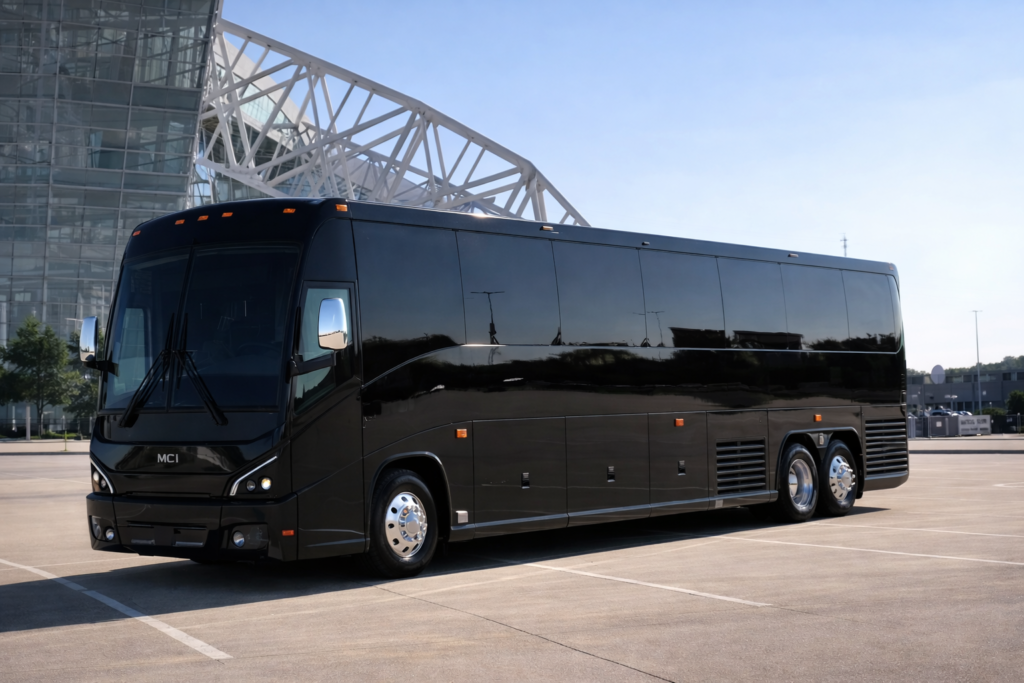
Multi-country travel is where vehicle selection becomes particularly important.
A European itinerary might combine France, Switzerland, Italy, Austria, Germany, Belgium, and the Netherlands. Distances can be significant, and every additional hotel, border crossing, sightseeing stop, and luggage movement adds logistical complexity.
Large Coach Multi-Country Travel
Coaches are highly practical when a large group follows one structured itinerary.
For example:
Paris → Brussels → Amsterdam → Cologne → Frankfurt
A coach allows the entire group to travel together with luggage stored in the vehicle. It also simplifies headcounts and coordinated departures.
However, coaches are not equally convenient everywhere. Historic European centers often have narrow streets, pedestrian zones, restricted access areas, or designated coach drop-off points.
Travel planners should therefore verify the exact hotel location and coach access before confirming the itinerary.
Small Group Multi-Country Travel
Small groups have greater freedom to adapt the route.
A private Mercedes Sprinter, for example, can work well for:
Paris → Reims → Strasbourg → Colmar → Zurich
The vehicle can accommodate a smaller group while making additional stops along the way. This can be valuable when travelers want to combine transportation with sightseeing.
For travel advisors, this creates an opportunity to design a more experiential itinerary instead of treating transportation simply as a transfer between two points.
How Group Size Changes the Transportation Decision
Group size is one of the first factors to consider, but it should not be the only one.
A 30-person group may clearly require a coach, but two groups of 15 travelers may sometimes benefit from separate minibuses depending on the itinerary.
| Group Size | Recommended Option | Why |
|---|---|---|
| 2–4 | Executive sedan or luxury van | Maximum flexibility |
| 5–8 | Luxury van/minivan | Comfortable for private travel |
| 9–16 | Mercedes Sprinter/minibus | Good balance of capacity and flexibility |
| 17–30 | Larger minibus or multiple vehicles | Depends on luggage and itinerary |
| 30–50 | Coach | Efficient group movement |
| 50+ | Large coach or multiple coaches | Best for organized group logistics |
The exact vehicle should also account for luggage. A vehicle that technically seats 16 passengers may not be the best choice for 16 travelers carrying large suitcases on a multi-week European journey.
That is one of the most overlooked issues in Coach vs Small Group Europe Tours planning.
Luggage: The Detail That Can Change Everything
Luggage capacity deserves its own planning stage.
A traveler arriving for a two-day business conference may have one small suitcase. A family spending two weeks across Switzerland, Italy, and France may have considerably more.
Full-size coaches generally provide generous luggage storage underneath the passenger cabin. Smaller vehicles have less overall luggage capacity, although vehicle configuration varies.
For small groups, travel planners should provide the transportation company with:
- Number of passengers
- Number of large suitcases
- Number of cabin bags
- Special equipment
- Strollers, if applicable
- Golf bags or sporting equipment
- Mobility equipment, if applicable
This information helps determine whether one luxury van is sufficient or whether a larger vehicle is more appropriate.
City Access: Why Smaller Vehicles Often Have an Advantage
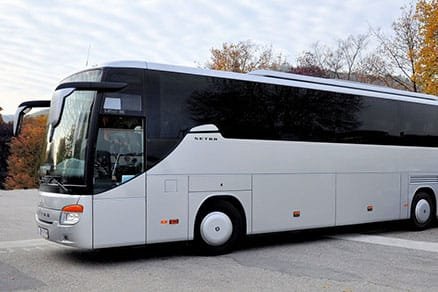
European cities were not designed around modern tour buses.
Historic districts in destinations such as Paris, Rome, Florence, Venice, Amsterdam, Prague, and Salzburg can contain narrow streets, pedestrian zones, low-clearance roads, restricted traffic areas, and limited coach parking.
A full-size coach may therefore need to stop at an authorized drop-off location some distance from a hotel or attraction.
A smaller vehicle can sometimes get closer to the final destination, subject to local traffic regulations.
This does not mean small vehicles can access every street. Local restrictions always apply. However, the smaller footprint can make urban transportation easier to manage.
For travel agents, checking coach access at the hotel before booking can prevent major operational problems later.
Comfort and Onboard Experience
Comfort is another major consideration.
Modern touring coaches can offer:
- Spacious reclining seats
- Air conditioning
- Large luggage compartments
- Onboard restrooms on some vehicles
- Wi-Fi on selected vehicles
- Panoramic windows
- Large seating capacity
This makes them particularly effective for long-distance journeys.
Small luxury vehicles offer a different type of comfort. Instead of maximizing passenger capacity, they focus on space, privacy, and flexibility.
A Mercedes Sprinter configured for executive or luxury travel can provide a more intimate environment for families, executives, VIP travelers, and private groups.
For Coach vs Small Group Europe Tours, the question is therefore not simply “Which vehicle is more comfortable?” It is “What type of comfort does the group value?”
Cost: Is a Coach Always Cheaper?
Not necessarily.
A common assumption is that a coach will automatically cost less because it transports more people. The actual economics depend on vehicle size, operating hours, route, mileage, driver requirements, parking, tolls, overnight stays, seasonal demand, and local regulations.
For large groups, one coach can often be more efficient than operating several smaller vehicles.
For smaller groups, however, paying for unused coach capacity may not make financial sense.
For example, putting 12 travelers into a 50-seat coach means most of the passenger capacity remains unused. A luxury minibus may provide a more proportionate solution.
Travel professionals should compare the total transportation cost, not just the hourly vehicle rate.
Consider:
- Vehicle rental
- Chauffeur/driver services
- Fuel
- Tolls
- Parking
- Driver accommodation when required
- Waiting time
- Airport fees
- City access requirements
- Additional transfers
This approach gives a more realistic picture of the transportation budget.
Coach vs Small Group Europe Tours for Different Travel Styles
1. Family Travel
Families often benefit from smaller vehicles because schedules can be more flexible.
A private vehicle can make it easier to accommodate children, frequent stops, luggage, and changes in plans.
For larger extended-family groups, however, a coach may be more practical.
2. Luxury Travel
Luxury travelers often prioritize privacy, personalized service, and door-to-door transportation.
A chauffeur-driven luxury van or executive vehicle can therefore be particularly suitable for private itineraries.
3. Corporate Travel
Corporate groups usually require punctuality, coordination, and predictable transportation.
For large conferences or company events, coaches can simplify movement between airports, hotels, conference venues, restaurants, and event locations.
For executives or smaller delegations, chauffeur-driven sedans and luxury vans may be preferable.
4. MICE Travel
MICE transportation often requires multiple vehicle types.
A conference may need:
- Coaches for general delegates
- Minibuses for smaller groups
- Executive sedans for VIPs
- Airport transfers
- Hotel shuttles
- Evening event transportation
- Vehicles at disposal
This is one situation where a transportation partner capable of providing different vehicle categories can simplify the operation.
Coach vs Small Group Europe Tours: Flexibility Comparison
| Factor | Coach | Small Group Vehicle |
|---|---|---|
| Large group capacity | Excellent | Limited |
| Door-to-door access | Moderate | Usually better |
| Route flexibility | Moderate | High |
| Spontaneous stops | Less convenient | Easier |
| Luggage capacity | Excellent | Vehicle dependent |
| Urban access | Can be restricted | Generally easier |
| Group coordination | Excellent | Excellent for small groups |
| Privacy | Lower | Higher |
| Corporate use | Excellent | Excellent for VIPs |
| Long-distance travel | Excellent | Very good |
| Rural sightseeing | Good | Excellent |
| Boutique hotels | May require drop-off planning | Often easier |
When a Combination of Vehicles Is Better
Sometimes the answer is not coach vs small group Europe tours.
It is coach plus small vehicles.
Consider a 70-person incentive group arriving in Paris.
A practical transportation plan could include:
- Large coaches for airport-to-hotel transfers
- Coaches for conference transportation
- Smaller vehicles for VIP executives
- Minibuses for evening restaurant transfers
- Chauffeur-driven sedans for senior management
This mixed-fleet approach allows the transportation plan to match the operational requirements of each movement.
It can also prevent the common mistake of using one vehicle category for every journey simply because it was used for the main tour.
How Travel Agents Should Plan European Group Transportation
Travel professionals should evaluate transportation during the itinerary-design stage rather than after hotels and sightseeing have already been confirmed.
Step 1: Establish the Actual Group Size
Determine the number of travelers on every travel date. Groups can change between arrival, touring, free days, and departure.
Step 2: Map Every Movement
List:
- Airport transfers
- Train station transfers
- Hotel transfers
- City sightseeing
- Intercity journeys
- Restaurant transfers
- Event transportation
- Departure transfers
Step 3: Check Hotel Access
A hotel may be centrally located but unsuitable for a full-size coach.
Confirm the nearest legal coach stopping point and walking distance where necessary.
Step 4: Calculate Luggage
Do not assume seating capacity equals practical passenger capacity.
Luggage volume can influence vehicle selection significantly.
Step 5: Consider Driver Regulations
Long-distance European group transportation may involve driver working-time requirements, rest periods, and operational limitations. Professional transportation providers should plan these requirements before the journey begins.
Step 6: Build Contingency Time
European traffic, city restrictions, roadworks, weather, and event congestion can affect journey times.
A good itinerary should leave reasonable operational buffers rather than scheduling every transfer to the minute.
Luxury Transportation Options for European Tours
Luxury transportation is not limited to one vehicle category.
Depending on the itinerary, travelers may use:
Executive Sedans
Ideal for:
- VIP airport transfers
- Business executives
- Couples
- Hotel-to-meeting transportation
- Chauffeur-at-disposal services
Luxury Vans
A practical choice for families and private groups that want more space than a sedan without using a large coach.
Mercedes Sprinter
Mercedes Sprinter vehicles are particularly useful for small and medium-sized groups. Configurations can vary, making it important to confirm the exact passenger and luggage arrangement before booking.
Touring Coaches
Large coaches remain the most practical solution for substantial groups traveling together between European cities.
The objective is not to choose the most luxurious vehicle available. It is to select the vehicle that best matches the group, route, luggage, access requirements, and travel style.
Why Travel Professionals Choose Tour Passion
For travel agencies, DMCs, tour operators, and corporate travel planners, transportation becomes considerably easier when one partner can coordinate different types of European ground services.
Tour Passion provides luxury ground transportation and DMC support across multiple European destinations, including France, Switzerland, Germany, Italy, Austria, Belgium, the Netherlands, Spain, Portugal, the Czech Republic, and Hungary.
Its transportation solutions include:
- Luxury chauffeur services
- Airport and hotel transfers
- Mercedes Sprinter transportation
- Executive sedans
- Coach rentals
- Group transportation
- Chauffeur-at-disposal services
- Corporate mobility
- MICE transportation
- Multi-country transportation
For a travel professional managing a multi-city itinerary, the advantage is having one transportation partner across Europe rather than coordinating separate providers for every destination.
Professional chauffeurs, multilingual support, flexible itineraries, airport coordination, and 24/7 customer assistance can also help reduce the operational workload for travel planners.
The right transportation partner should function as an extension of the travel operation—not simply as a vehicle supplier.
Practical Mistakes to Avoid
When planning Coach vs Small Group Europe Tours, avoid these common mistakes:
Booking Based Only on Passenger Capacity
A vehicle may have enough seats but insufficient luggage space.
Ignoring Hotel Access
Always confirm whether a full-size coach can legally approach the hotel.
Underestimating City Traffic
Central European cities can become heavily congested during peak periods, festivals, trade shows, and major events.
Using One Vehicle for Every Movement
Airport transfers, sightseeing, VIP movements, and conference transportation may require different vehicle categories.
Leaving Transportation Until the Last Minute
Popular European destinations can experience high demand during summer, Christmas markets, major sporting events, exhibitions, and conferences.
Forgetting About Cross-Border Logistics
Multi-country journeys require advance planning for routes, tolls, driver requirements, border crossings, parking, and local access regulations.
Best Choice by Trip Type
| Trip Type | Recommended Transportation |
|---|---|
| 2–4 travelers | Executive sedan/private car |
| Family of 5–8 | Luxury van |
| Private group of 9–16 | Mercedes Sprinter/minibus |
| 20–30 travelers | Minibus or coach depending on itinerary |
| 30–50 travelers | Touring coach |
| 50+ travelers | Large coach/multiple coaches |
| VIP corporate delegation | Executive vehicles + luxury vans |
| Large MICE event | Mixed fleet |
| Multi-country private tour | Luxury van or coach based on group size |
| Large European group tour | Coach |
Final Verdict: Coach vs Small Group Europe Tours
Coach vs Small Group Europe Tours ultimately comes down to the relationship between group size, itinerary complexity, luggage, city access, flexibility, and budget.
Coaches are the natural choice for large groups that want to travel together efficiently. They offer substantial luggage capacity and simplify coordinated group movements across long European routes.
Small group transportation is better when flexibility, privacy, boutique hotels, rural destinations, and customized sightseeing are priorities. Luxury vans and minibuses can make certain European itineraries considerably easier to operate.
For travel professionals, the smartest approach is to design transportation around the itinerary—not force the itinerary around the vehicle.
Whether you are organizing a private family journey, a luxury multi-country tour, a corporate delegation, or a 60-person European group, Tour Passion can help match the transportation plan to the actual operational requirements.
Plan Your European Transportation With Tour Passion
Planning a European group itinerary?
Tour Passion can assist travel professionals and travelers with customized transportation solutions, including airport transfers, chauffeur services, luxury vans, Mercedes Sprinter transportation, coaches, hotel transfers, corporate mobility, and multi-country European travel.
Request a quotation, discuss your itinerary, or plan your vehicle requirements in advance to create a smoother journey from arrival to departure.
For Coach vs Small Group Europe Tours, the right vehicle is the one that makes the entire itinerary work better—not simply the one with the most seats.
FAQs About Coach vs Small Group Europe Tours
Is a coach better than a minibus for European group tours?
A coach is generally better for larger groups traveling together on a structured itinerary. A minibus or luxury van is usually more suitable for smaller groups that value flexibility and easier access to city-center locations.
What size group needs a coach in Europe?
There is no fixed passenger number because vehicle choice also depends on luggage, route, hotel access, and itinerary requirements. In general, groups of around 30 or more often benefit from coach transportation, while smaller groups can usually use minibuses or luxury vans.
Are small group Europe tours more flexible than coach tours?
Yes. Smaller vehicles can generally accommodate customized stops, boutique hotels, rural destinations, and itinerary adjustments more easily. However, local road restrictions still determine where any private vehicle can travel.
Is a coach cheaper than using several minibuses?
For large groups, one coach can often be more efficient than operating multiple smaller vehicles. The final cost depends on mileage, hours, parking, tolls, driver requirements, vehicle type, and the specific European destinations involved.
Can Tour Passion arrange transportation across multiple European countries?
Yes. Tour Passion provides ground transportation solutions across multiple European destinations, including airport transfers, chauffeur services, luxury vans, coaches, corporate transportation, and multi-country travel arrangements.
How far in advance should European group transportation be booked?
Advance booking is recommended, particularly for summer travel, Christmas markets, major European events, conferences, and large group tours. Early planning also gives travel professionals more time to confirm vehicle availability, hotel access, luggage requirements, and the complete transportation schedule.
Suggested For You
Multi-Country Europe Tour Package – 11 Days
Switzerland France Tour Package – 12 Days
Luxury Transfer Services in Europe
Recommended Europe Travel Services
Paris coach hire,
Paris chauffeur service,
Schiphol airport transfers,
Amsterdam airport taxi,
Paris airport transfer,
Europe coach rental,
Barcelona airport transfers,
Barcelona transportation,
Luxury Europe travel,
Interlaken transfers,
Davos transfers,
Italy chauffeur services,
Paris car rental